If you have ever toured homes in Beverly Hills and wondered why one feels like a private European estate while another feels like a glassy indoor-outdoor retreat, the answer is usually architecture. In Beverly Hills, style is more than curb appeal. It often shapes layout, privacy, entertaining space, and even what changes may be easier or harder to make over time. If you are buying, selling, or simply trying to better read the market, understanding the city’s defining home styles can give you a sharper eye. Let’s dive in.
Beverly Hills Architecture in Context
Beverly Hills grew from rancho land into an incorporated residential city in 1914, and its residential architecture evolved in clear waves over the decades. According to city history, the 1920s and 1930s marked the peak of estate development, when Period Revival styles dominated single-family construction.
After World War II, the local housing story expanded to include Mid-century Modern, Contemporary Ranch, and Hollywood Regency homes. By the 1980s and later, new construction also brought more contemporary residences to hillside sites and redeveloped flat parcels.
That timeline matters when you walk into a home today. In Beverly Hills, architecture often tells you not just when a house was built, but how it was meant to be lived in.
Period Revival Homes Defined Early Beverly Hills
In the 1920s and 1930s, Beverly Hills became known for extravagant single-family homes in revivalist styles. City landmark research points to Spanish Colonial Revival, Tudor Revival, French Revival, Colonial Revival, Beaux-Arts Classicism, and Italian Renaissance Revival as major influences during this period.
For many buyers, the most recognizable examples today are Spanish Colonial Revival and Mediterranean Revival homes. These houses helped shape the classic Beverly Hills estate look, with formal street presence and carefully composed landscaping.
Spanish Colonial Revival Features
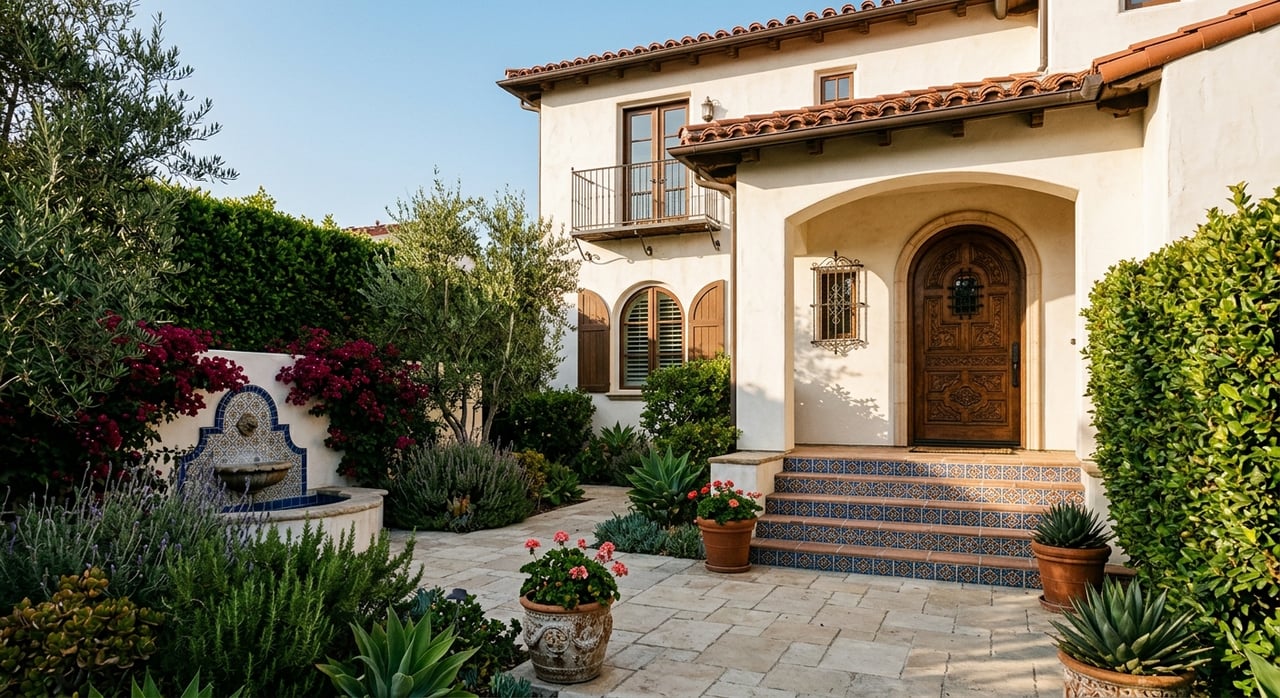
Spanish Colonial Revival homes in Beverly Hills often include smooth stucco walls, arched openings, decorative tile, wrought-iron details, and mission barrel roof tiles. The city’s report on the Joe E. Brown Residence at 707 North Walden Drive also highlights patios, balconies, verandas, loggias, and courtyards as defining elements.
For you as a buyer or seller, that usually translates into a home with a strong sense of arrival. These properties often feel layered and private, with enclosed or semi-enclosed outdoor spaces that work like true living areas.
Mediterranean Revival Features
Mediterranean Revival estates often overlap with Spanish and Italian influences. The city’s report on the Rogers/Cohn House at 1000 North Crescent Drive describes a combination of Italian Renaissance Revival and Spanish Colonial Revival elements, including a symmetrical facade, red clay tile roofs, ironwork, and lush gardens.
These homes can feel especially composed from the street. Inside, they often reflect more defined room separation than later modern homes, while still emphasizing outdoor rooms and garden relationships.
Why Revival Homes Feel Different
One of the easiest ways to understand these homes is to think about how they organize daily life. Many Beverly Hills revival properties were designed with formal arrival sequences, fountains, courtyards, landscape symmetry, and service wings.
That is why they often feel more like private compounds than simple houses. If you are drawn to character, architectural detail, and a sense of old Hollywood-era formality, this category may stand out right away.
Postwar Beverly Hills Brought Modern Living
After the revival era, Beverly Hills embraced a different architectural language. Postwar development introduced homes that were less formal, more open, and more closely tied to light, landscape, and casual movement.
A key part of that shift came with the 1955 creation of Trousdale Estates from former Doheny ranch land. City landmark research notes that Mid-century Modern, Contemporary Ranch, and Hollywood Regency became the most common styles there.
Mid-century Modern Changed the Floor Plan
Mid-century Modern homes remain some of the most influential residences in Beverly Hills. The Rosenstiel Residence at 1210 Coldwater Canyon Drive, a local landmark by Gruen + Krummeck, is described by the city as a low, horizontal house with low-pitched roofs and wide eaves.
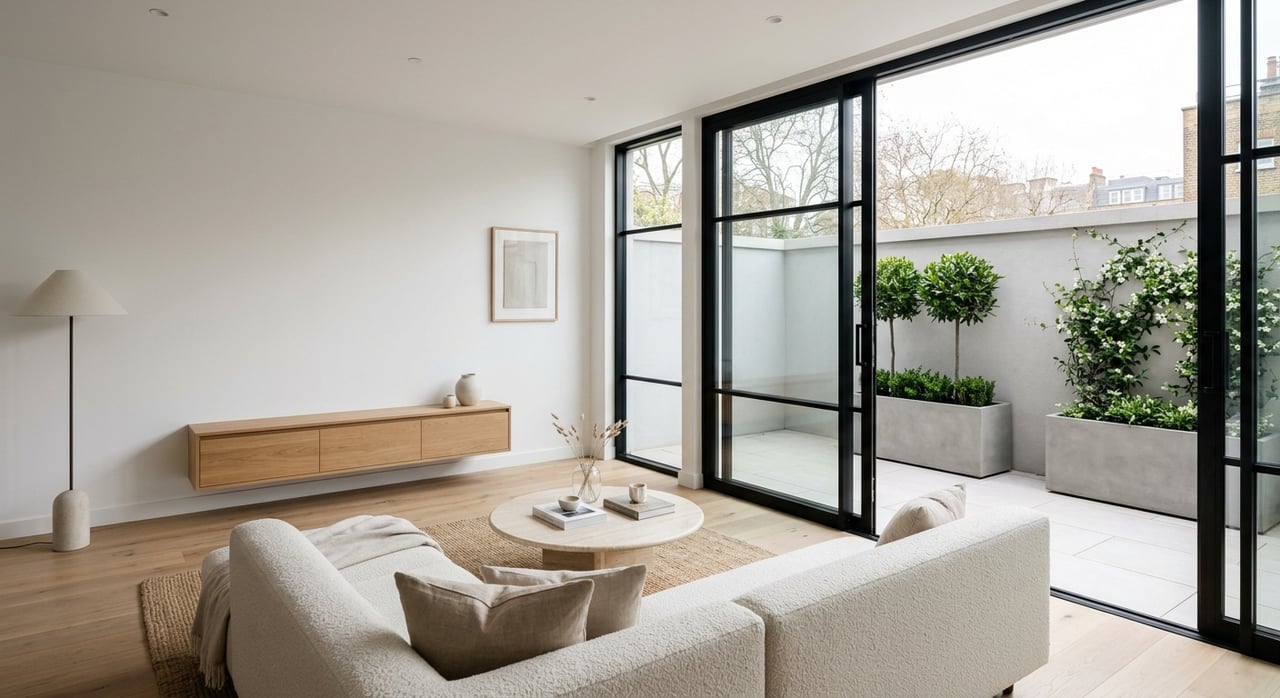
This style is also associated with clean lines, little to no applied ornament, organic forms, and innovative uses of glass. For everyday living, that usually means less formal separation between rooms and a stronger connection between interior and exterior spaces.
What to Look For in Mid-century Modern Homes
When touring Beverly Hills homes, Mid-century Modern usually reveals itself through a few consistent visual clues:
- Low horizontal forms
- Broad eaves
- Clean lines
- Minimal ornament
- Expansive glass
- Open, light-filled interiors
If you want a home that feels easy, airy, and visually restrained, this style often delivers that experience very clearly.
Hollywood Regency Added Glamour
Hollywood Regency is another major Beverly Hills style, especially for buyers who want architecture with a polished social side. The city’s report on the 1954 Vance Residence at 805 North Hillcrest Road, designed by John Elgin Woolf, describes a one-story home with a swimming pool, dressing rooms, garden walls, a cabana, and a winter-garden terrace.
That mix says a lot about how the style works. Rather than focusing on the inward-facing courtyards of earlier revival homes, Hollywood Regency often centers on entertaining, staged privacy, and elegant outdoor living.
How Hollywood Regency Lives
Hollywood Regency homes are often designed to feel glamorous without losing residential comfort. You may notice features such as:
- One-story layouts
- Pool-centered outdoor space
- Garden walls for privacy
- Cabana or terrace areas
- A stronger entertaining focus
For some buyers, this style offers a sweet spot between classic Beverly Hills image and more relaxed postwar living.
Later Modernism and Contemporary Homes
Beverly Hills also has a strong modern pedigree beyond classic mid-century design. The city’s local register includes major architectural homes such as the Neutra-designed Kronish Residence, described by the Los Angeles Conservancy as an International Style residence, and the 1979 Gindi-Birnkrant House, which city research associates with open space, verticality, structural modularity, simplicity of form and palette, and a strong indoor-outdoor relationship.
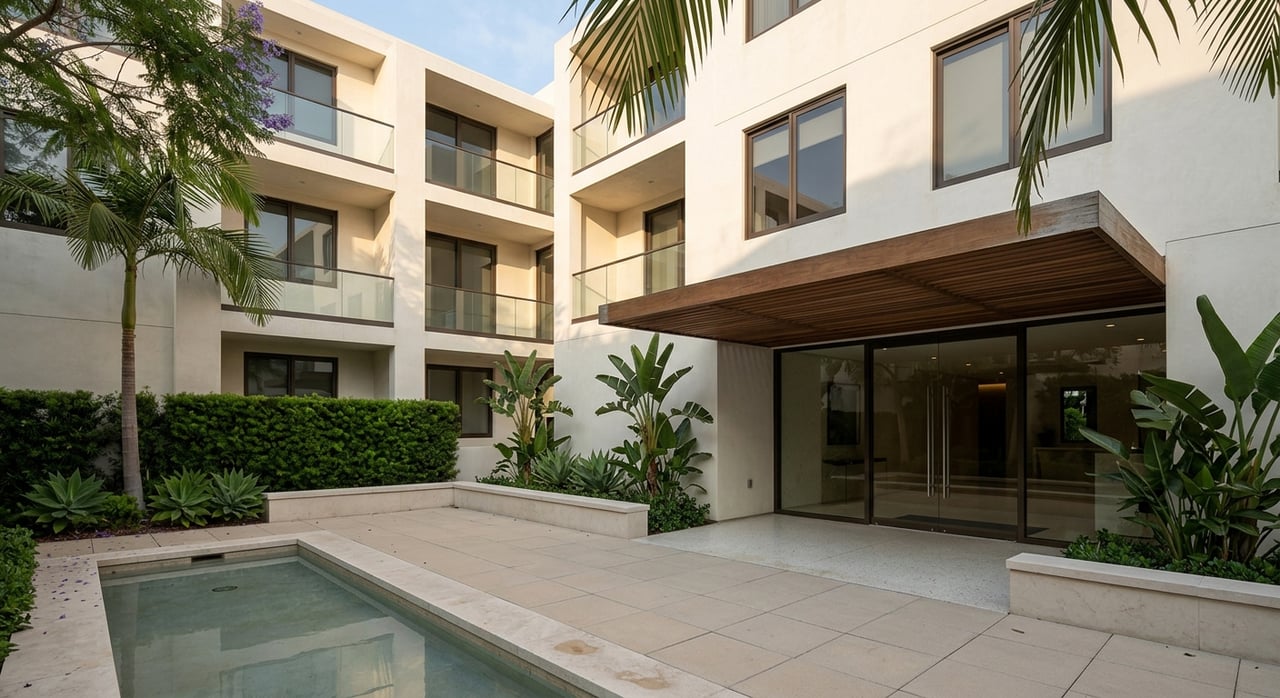
These homes help bridge the gap between early modernism and the more contemporary houses that followed. They show how Beverly Hills architecture continued to move toward simpler forms and stronger spatial openness over time.
Contemporary Beverly Hills Homes Today
For later properties, city survey records use the label Contemporary for homes such as 120 South Palm Drive, built in 1989, and 141 South Rexford Drive, built in 2006. City landmark research also notes that by the 1980s, Beverly Hills was seeing monumental contemporary residences on undeveloped hill sites and redeveloped parcels.
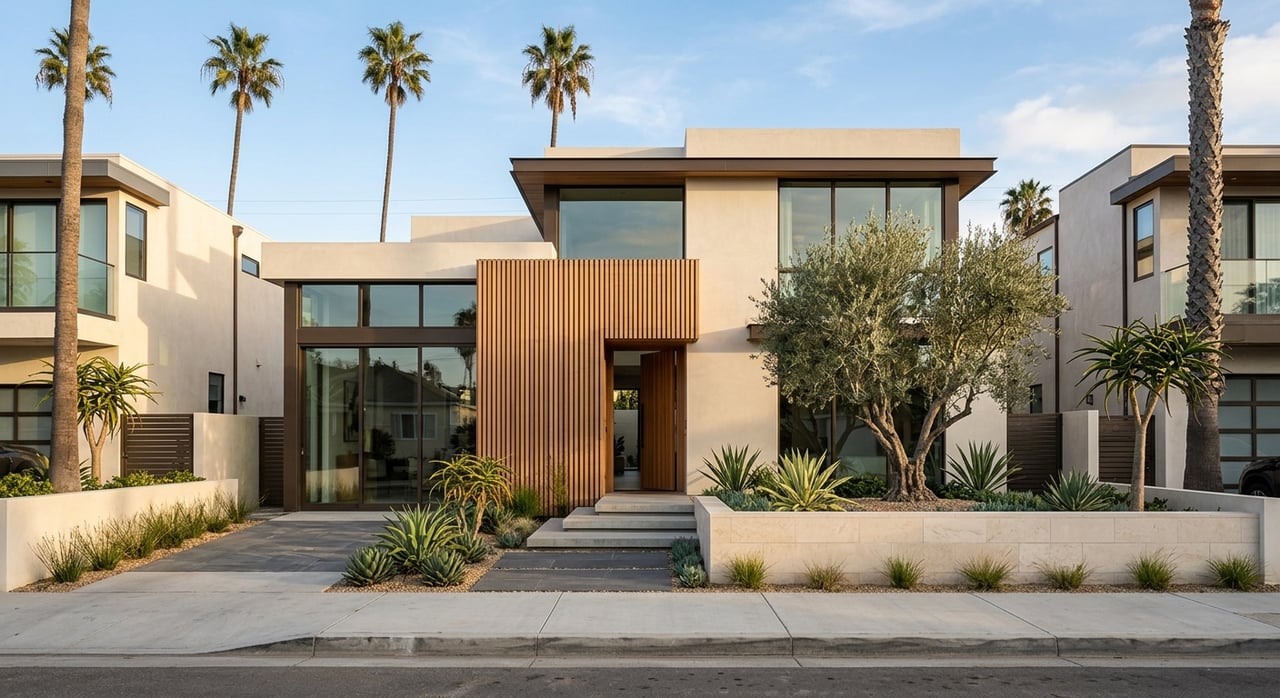
In practical terms, contemporary Beverly Hills homes often read as an updated modernist vocabulary. You will typically notice broader glazing, simpler massing, and a stronger sense of continuity between indoor and outdoor areas.
What Contemporary Design Signals
If you are comparing homes in Beverly Hills, contemporary design often suggests a different lifestyle priority than earlier styles. These homes tend to favor:
- Large glass openings
- Simpler exterior forms
- More restrained material palettes
- Seamless outdoor rooms
- A stronger emphasis on openness
For sellers, this matters because buyers often respond to these homes very differently than they do to revival estates. For buyers, it can help clarify whether you prefer architectural character rooted in ornament or in simplicity.
How to Read a Beverly Hills Home Quickly
When you are touring properties, a few visual clues can help you identify style right away. This can be useful when comparing homes that may offer very different daily living experiences, even at similar price points.
Quick Style Guide
- Spanish Colonial Revival or Mediterranean Revival: stucco, arches, clay tile, wrought iron, fountains
- Mid-century Modern: low horizontal forms, broad eaves, little ornament
- Hollywood Regency: one-story glamour, pools, cabanas, garden walls
- Late-modern or Contemporary: large glazing, simple forms, outdoor rooms
The more homes you see, the easier this becomes. Style recognition can help you spot not just aesthetics, but also likely layout patterns, privacy features, and renovation considerations.
Historic Status and Exterior Changes Matter
In Beverly Hills, architectural style is not just a design topic. It can also affect what you should verify during your search or before planning updates.
The city manages architectural heritage through historic resource surveys, a local register, landmark criteria, and exterior review rules. Surveys can identify places of social, historical, or architectural significance, but they do not automatically designate landmarks.
For local landmark status, Beverly Hills requires a property to be at least 45 years old, retain integrity, and embody a significant architectural style, period, or type. In the Central Area, visible exterior changes to single-family homes are subject to design review, with attention to design compatibility, prevailing styles, neighborhood character, scale, and mass.
If you are buying a home with possible historic significance, or selling one with notable architectural features, these details are worth understanding early. They can shape planning, positioning, and expectations.
Why Architecture Matters in Beverly Hills Real Estate
In Beverly Hills, architecture influences more than appearance. It often affects how a home lives, how it shows, and how buyers emotionally connect with it.
A Spanish Colonial Revival estate may attract someone looking for privacy, layered outdoor space, and classic architectural detail. A Mid-century Modern home may appeal to a buyer who wants openness, light, and a cleaner visual language. A contemporary residence may resonate with someone focused on scale, glass, and seamless indoor-outdoor living.
That is why style fluency matters whether you are preparing a property for sale or narrowing your search as a buyer. The more clearly you understand what defines a home, the better you can evaluate fit, value, and long-term potential.
If you are considering a move in Beverly Hills and want strategic guidance on how architecture, presentation, and market positioning intersect, Jennifer Purdue offers thoughtful support across buying, selling, leasing, and long-term property decisions.
FAQs
What architectural styles are most common in Beverly Hills homes?
- Beverly Hills is especially known for Period Revival homes from the 1920s and 1930s, including Spanish Colonial Revival and Mediterranean Revival, along with postwar Mid-century Modern, Contemporary Ranch, Hollywood Regency, and later Contemporary homes.
How can you identify a Spanish Colonial Revival home in Beverly Hills?
- Look for smooth stucco walls, arches, decorative tile, wrought-iron details, clay or mission barrel roof tiles, and outdoor features such as courtyards, patios, balconies, or loggias.
What makes Mid-century Modern homes different in Beverly Hills?
- Mid-century Modern homes in Beverly Hills often have low horizontal forms, broad eaves, clean lines, minimal ornament, and more open floor plans with stronger indoor-outdoor flow.
What is Hollywood Regency style in Beverly Hills residential architecture?
- In Beverly Hills, Hollywood Regency is a postwar residential style associated with glamour, entertaining, privacy, one-story layouts, pools, cabanas, garden walls, and polished outdoor living spaces.
Do historic rules affect Beverly Hills homes with notable architecture?
- Yes. Beverly Hills uses historic surveys, a local register, landmark criteria, and, in the Central Area, design review for visible exterior changes to single-family homes.
Why does architectural style matter when buying or selling in Beverly Hills?
- Architectural style can influence layout, privacy, entertaining space, buyer appeal, and how a home is positioned in the market, which makes it an important part of both search strategy and sale preparation.